Blog

Augmented Reality will Inform, Entertain … and Empower

Posted by Shara Evans in Blog

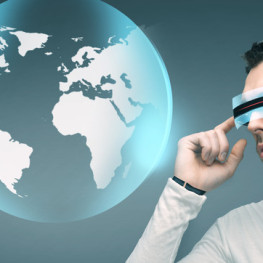
Augmented reality is a broad term encompassing technologies that add information to our, generally visual, experiences of the real world. Examples include: nutrition information about a product on a supermarket shelf, the identity of a person using facial recognition technology, multiple views of a sporting event, or value and location information on a property for sale.

In this Future Tech interview, we speak with augmented reality pioneer, Scott O’Brien. He examines some of the current and emerging applications for augmented reality, looks at the key enabling technologies, and at recent acquisitions as global players move to gain an early lead in the field.

Cloud Services: Automating End-to-End Performance Management and Control

Posted by Shara Evans in Blog

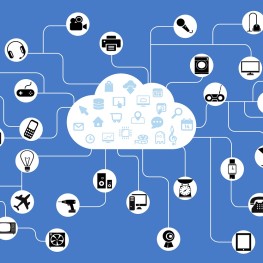
One of the main obstacles to enterprise cloud service adoption is the perception of lack of control. Companies want the surety of knowing where their data is, how it’s being carried around, as well as guaranteed performance. There are also a variety of clouds — Google, Amazon, Apple, Samsung, carrier clouds, sensor clouds, other IoT clouds and private clouds, all of which need to interconnect, with consistent performance.

Serenus a Sydney-based start-up, has been awarded several patents as well as a NSW Innovation R&D grant for its work on VPNscope, a tool that takes real-time feeds to determine end-to-end network performance across cloud environments all the way to end user devices — automating on-demand capacity management, as well as calculating the performance of the individual infrastructure elements involved in the delivery of end-to-end services over a cloud network.

In this Future Tech interview, we speak to Serenus Founder Ross Goodfellow, about enterprise cloud requirements, and their innovative cloud management tools.

3D Food Printers: A Next Generation Kitchen Appliance?

Posted by Shara Evans in Blog

3D printing is set to be one of the hottest technologies of the coming decade. However, most people don’t think of food and 3D printing at the same time.

Natural Machines is aiming to change that. They’ve designed a 3D food printer (Foodini) that uses real ingredients to create everything from pastas, pizzas, burgers, bread, cookies, and almost anything else that takes time and effort to assemble and shape. And, it’s an IoT device — able to pull recipes and food shapes from the Internet, as well as dialoguing with other smart kitchen devices.

In this Future Tech interview, we speak to co-Founder Lynette Kucsma about what may very well be tomorrow’s must-have kitchen appliance.

Net Neutrality: Does this mean we can’t have Premium Service Offers?

Posted by Shara Evans in Blog

Optus CEO Allen Lew kicked off a firestorm at the CommsDay Summit when he talked about offering a premium Netflix (or other video content) service with guaranteed performance. In Lew’s speech he suggested that OTT video providers could pay for better end-to-end connectivity by working with telcos to ensure a better service for their customers.

Lot’s of people are crying foul: saying that this would violate the principle of net neutrality, wherein network providers are obligated to treat all traffic — regardless of its origin or content type — equally. The idea is that all services offered to customers should have a level playing field in competing with one another for delivery across the Internet.

Extant: Sci-Fi Hits and Misses

Posted by Shara Evans in Blog

Given our recent focus on the nexus of science and sci-fi, we thought it would be interesting to take a look at a recent science fiction show, Extant (starring Halle Berry), to see how well Extant’s predictions for 2030-2040 line up with real world emerging technologies, and our futurist views.

From Sci-Fi to Reality: Star Trek, Time Travel, Human Augmentation and More

Posted by Shara Evans in Blog

For over 100 years science fiction stories have provided a fertile ground for imaging the world of tomorrow, often inspiring real world scientific research and technology innovation.

Star Trek is a great example of a science fiction universe that’s had a huge influence on the world of science and technology — introducing concepts such as the communicator (mobile phone), tricorder (mobile health apps and wearables), replicator (3D printing), faster than light travel, and transporters.

In the second part of our Future Tech interview with Dr Paul Halpern, noted science author and Professor of Physics, we continue our discussion on the nexus of science and sci-fi.

From Sci-Fi to Reality: Exploring the Nexus of Science and Sci-Fi

Posted by Shara Evans in Blog

In the first part this Future Tech interview, Dr Paul Halpern, noted science author and Professor of Physics, explores the nexus of science and sci-fi in futurism, to see what that might tell us about how technology could evolve over the next decade or so. A common theme among scientists who read science fiction is that it sparks their imagination, and then they find ways of inventing things.

Some of the technologies predicted in science fiction include submarines (1870), the atomic bomb (1914), robotics (1939), getting news from phones (1943), satellites (1945), exponential growth in computer processing power (1956) and mobile phones (1966).

Of course, not all predictions pan out — and, we’re still waiting for teleportation and time travel!

3D Printing and Mass Customisation: Transforming the Future

Posted by Shara Evans in Blog

3D printing is set to transform many industries, none more so than manufacturing. Today, many items are outsourced to overseas manufacturers because of lower labour costs. With 3D printing the labour costs associated with production will plummet, making local manufacturing much more competitive. In the future, robot factories may even detect a need for a replacement part and automatically print and install it, with no human intervention required.

Retailers such as Nike are already experimenting with mass customisation. In a few years, everything that a consumer may want — from clothing to makeup to vases, dishware, you name it, customisation options will become more and more pervasive on the back of increasingly sophisticated 3D scanning.

In the second part of our Future Tech interview with Ginna Raahauge, Senior Vice-President and CIO of Riverbed (and long-time 3D printing enthusiast), we continue our discussion on 3D printing.

3D Printing: A Truly Disruptive Technology

Posted by Shara Evans in Blog

3D printing is set to disrupt business as usual across a wide range of industries. Rather than shipping and storing spare parts in depots around the world, vendors and manufacturers will soon be printing parts on demand. Shipping complex CAD files around, rather than parts, will require both network capacity and high-speeds, as well as security measures to protect valuable intellectual property. Could 3D printing be the “killer app” for the NBN?

In the first part of this Future Tech interview with Ginna Raahauge, Senior Vice-President and CIO of Riverbed (and long-time 3D printing enthusiast), we talk about how 3D printing will impact many industries, including networking hardware vendors and manufacturers, the arts, and even the construction sector.

ACFR: Robots Set to Transform the Automotive and Agricultural Industries

Posted by Shara Evans in Blog

In this Future Tech interview, we’re continuing our discussion with Dr Robert Fitch from the Australian Centre for Field Robotics, about autonomous robots.

If you’ve wondered how driverless cars will navigate roads, and the type of sensors and instrumentation required to do so, you’ll be fascinated by the work being done at ACFR.

ACFR has also designed award-winning robots that will have a profound impact on the agricultural industry — saving crops from invasive weed species (and other pests) on the ground and in the air.